
Micro Transit Service Plan

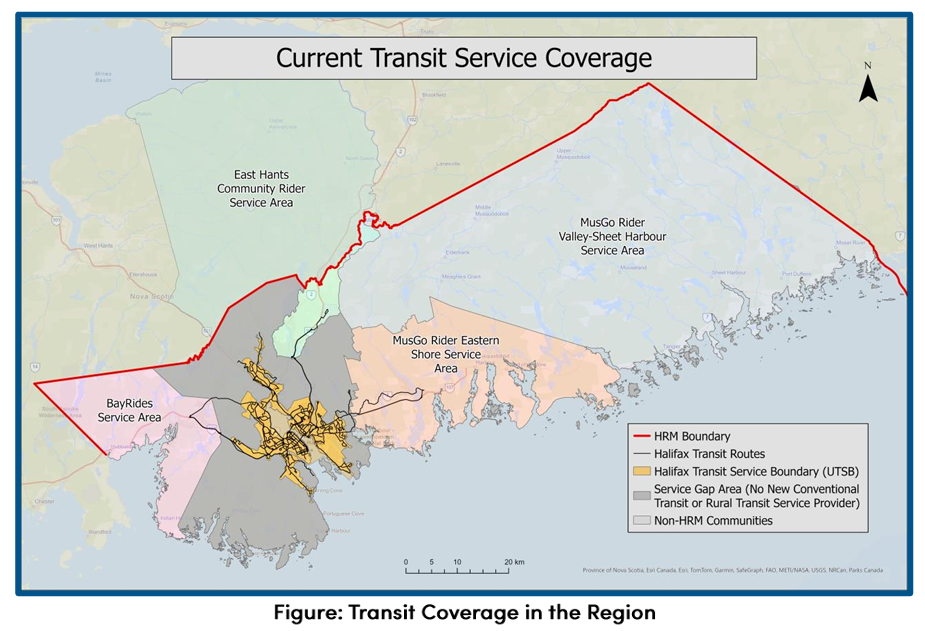
For many residents in our region, "public transit" is something they see in the urban core but can’t actually use. Currently, over 1,000 square kilometers of the Halifax Regional Municipality currently sits outside the reach of conventional bus routes. Historically, this is because transit priority has been attached to the urban service boundary (where there is sewer and water service), where Rural Transit Providers (like BayRides) offer door-to-door transit services in their associated catchment area.
The Microtransit Service Plan (report here), recently brought before the Transportation Standing Committee and approved by Regional Council, aims to change that by introducing a technology-enabled, flexible service model designed specifically for these gaps.
What is Microtransit?
Unlike traditional buses that follow a fixed route and a set schedule, microtransit (or on-demand transit) uses dynamic routing to meet passengers where they are. Using a mobile app, web portal, or hotline, you book a ride when you need it. The system’s software then optimizes the vehicle's path in real-time to pick up multiple passengers heading in a similar direction.
Key features include:
- Nimble Fleet: Uses mid-sized vehicles like vans or small buses that can navigate narrow streets and cul-de-sacs where a full-sized bus can't go.
- Curb-to-Curb Service: Vehicles pick you up and drop you off at the curb or the base of your driveway, providing a high level of convenience in areas without sidewalks.
- Network Integration: The primary goal is "First-Mile/Last-Mile" connectivity—connecting you from your home to a major transit hub like Sackville Terminal or Portland Hills Terminal so you can access the wider network.
The Proposed Rollout:
Implementation is proposed in three distinct phases:
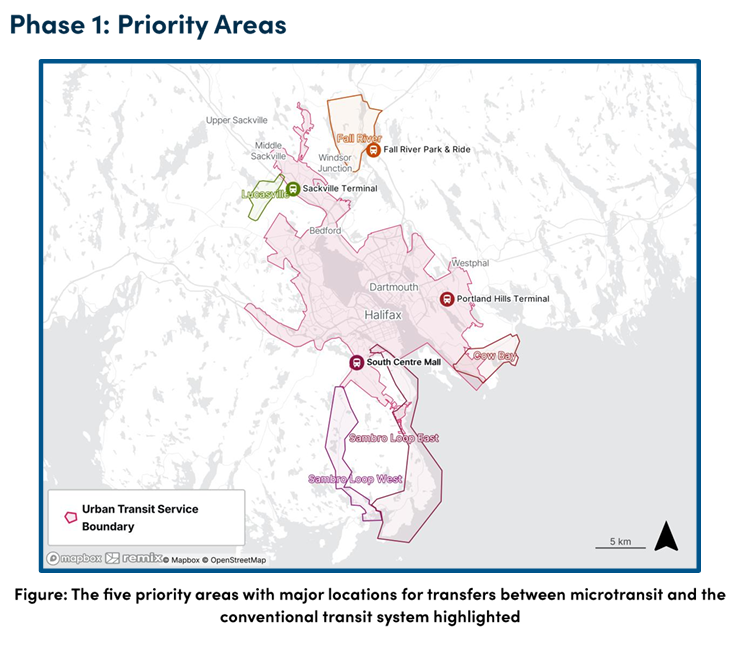
Phase 1 (Priority Areas): Launching the Lucasville pilot and eventually expanding to Fall River, Cow Bay/Eastern Passage, and the Sambro Loop.
Why Lucasville First?
While five priority areas have been identified—Lucasville, Fall River, Cow Bay/Eastern Passage, and Sambro Loop (East and West)—the plan recommends starting with Lucasville as a Proof of Concept. Lucasville is a historic African Nova Scotian community with a compact settlement pattern and strong community advocacy for better transit. By starting here, the municipality can validate the service model in a high-propensity area before expanding to more challenging, dispersed environments.
Phase 2 (Urban/Suburban Gaps): Exploring on-demand service for other communities like Prospect, Africville, off-peak service in industrial parks (like Burnside), or replacing low-ridership fixed routes with more efficient on-demand solutions.
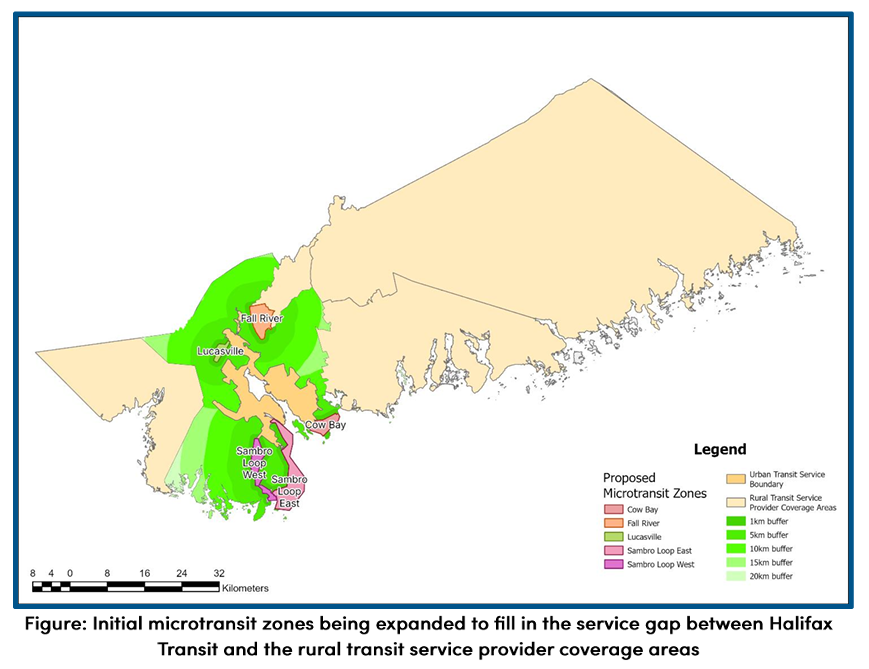
Phase 3 (Regional Expansion): Gradually expanding boundaries to cover remaining unserved communities across the municipality.
Expand microtransit to communities already served by Rural Transit Providers.
What it means for District 13:
For many reasons, I was disappointed by the outcome of this report. While I was encouraged to see that HRM is looking to make transit options available to more residents outside of the urban service boundary, I was shocked to see Prospect not included in the initial roll out. Also, by not leveraging and supporting Rural Transit Providers alongside this rollout while putting the communities they serve last, the communities of St. Margaret's Bay will land at the farthest end of the service plan rollout.
I immediately followed up with staff to understand the rationale for their priorities. As far as the Prospect communities are concerned, two main points were raised.
Firstly, HRM staff did not receive the same community engagement response from Prospect like they had with other communities. That engagement was done before my time on Council. I asked to see the report from community engagement, and it is available here. I will note that community engagement for District 11 (which at the time included Spryfield, Sambro Loop and Prospect) was done at Mishoo's Variety Store & Take Out in Sambro. While staff acknowledge that their assumption is that all communities want transit options, I've asked staff to re-engage with the Prospect Communities to get a better understanding of support and need for transit, and continue to advocate for mobility options in the Prospect Communities.
Second, and much more importantly, Prospect (and almost all of District 13) has so little infrastructure that the "First-Mile/Last-Mile" application of microtransit is not an option. In other words, because we don't have nearby transit to connect into, microtransit has less opportunity to succeed.
The Financial Reality:
While microtransit offers a more equitable transit system, it comes with significant costs. Operating an on-demand service is estimated to cost between $95 and $115 per service hour. For the Lucasville pilot alone, the net annual operating cost is estimated at $1.675 million. This will not be included in this years budget, but the rollout will be considered in the following years. The funding to serve all rural communities in HRM will come at an estimated cost of $55 million should it advance.
In all honesty, I do not see how HRM can afford microtransit the way it is presented. Although not discussed in the report, I'd expect that an area rate will have to be applied to fund it, or at least in part (transit currently comes with an area rate for the communities they serve right now). Whether it is funded solely from the general tax rate, or offset by an area rate for the communities microtransit will serve, I question whether the taxpayer is prepared to pay for such a service.
To mitigate these concerns, I have begun the work with staff on alternatives that are more cost-effective, inline with our communities needs, and leveraging services we already have. Transit hubs (or carpool parking lots) in Prospect and Tantallon with reliable, ongoing service to major terminals would go a long way. Not having a transit hub is also a barrier to microtransit. With that in mind, it makes the most sense to start there. Also, I will continue to find ways to support BayRides, and explore options for expansion.